My Sweet Passion Fruit Sunday Centrepiece
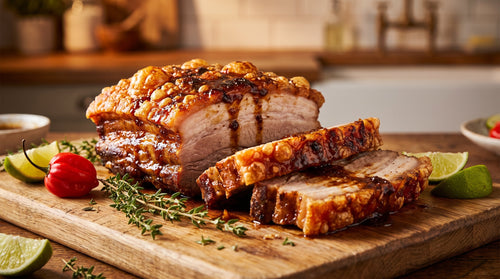
When I was a boy in Guadeloupe, a whole ham on the table meant something. It meant the family was coming. Aunties, uncles, cousins I only half remembered, all of them arriving at once, all of them hungry. My mother would put a big glazed ham in the middle of the table, and for a moment nobody spoke. They just looked at it. That shine on the top, dark and sticky and gold. The cloves poking out of the fat. The smell of sugar caught at the edges where it had caught in the oven. That was the sign. Today we eat properly. Today we do not rush.
A ham like this is not a weeknight thing. It is a moment. You make it when you have people to feed and a reason to feed them. Christmas, a big Sunday, a birthday, the day someone comes home. It takes a little time, but almost none of that time is you standing over the pot. The ham does the work while you set the table and pour the drinks.
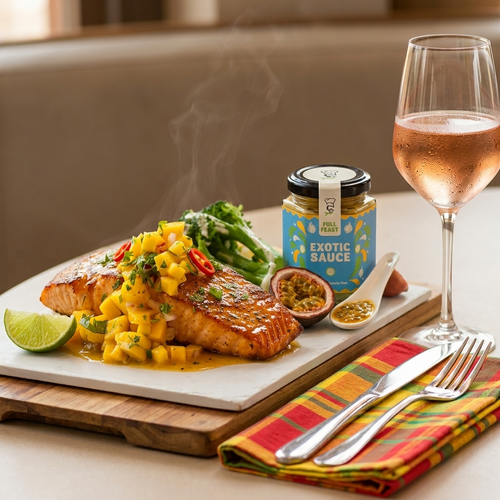
Let me show you how I make mine. It is not a French Caribbean ham exactly, because ham is not really our tradition back home. But the glaze is pure island. Sweet, fruity, a whisper of chilli underneath the sugar, and a little rum for warmth. The heart of it is one jar of my Exotic Caribbean Sauce, passion fruit and gentle heat, and it turns an ordinary gammon into the thing everyone remembers about the meal.
Recipe at a glance
- Cuisine: Caribbean fusion
- Prep: 20 minutes • Cook: 2 hours 10 minutes • Total: 2 hours 30 minutes
- Serves: 10 (with plenty left for sandwiches)
- Featured sauce: Exotic Caribbean Sauce
- Heat level: 3/10, fruity first, a warm hum underneath
- Diet: Gluten free, dairy free
What you’ll need
The ham itself is simple. A good unsmoked gammon joint, some aromatics for the pot, and then the glaze, which is where the island comes in. Buy the best gammon you can. I like a boneless unsmoked joint around 2kg, because it carves easily and feeds a crowd. If you can only find smoked, that is fine too, it just brings a deeper, saltier note.
Everything on this list is gluten free and dairy free as written. Do check your mustard, because some brands hide wheat in there. And the rum is optional, so leave it out if you are cooking for little ones or you simply do not want it.
For the ham:
- 2kg unsmoked boneless gammon joint
- 1 onion, peeled and halved
- 2 bay leaves
- 1 cinnamon stick
- 1 teaspoon whole allspice berries (or a good pinch of ground allspice)
- 1 teaspoon black peppercorns
- 20 to 30 whole cloves, for studding
For the glaze:
- 4 tablespoons Exotic Caribbean Sauce
- 6 tablespoons dark brown sugar
- 2 tablespoons Dijon mustard (check it is gluten free)
- 3 tablespoons pineapple juice
- 2 tablespoons dark rum (optional)
- Zest of 1 lime
How I make it
Do not rush this. The ham rewards a little patience, and most of the waiting is quiet. Put the pot on, then go and do something else.
-
Soak if you need to. If your gammon is very salty or heavily cured, sit it in a big bowl of cold water for a couple of hours, or overnight in the fridge, then drain. For a standard supermarket unsmoked joint you can usually skip this. When in doubt, soak. It only ever helps.
-
Start the pot. Put the gammon in your largest pot, fat side up. Add the onion, bay leaves, cinnamon stick, allspice and peppercorns. Pour in cold water until the ham is just covered. Bring it slowly up to a gentle simmer. You do not want a rolling boil, that toughens the meat. You want lazy bubbles, the kind that break the surface once in a while.
-
Simmer low and slow. Cook it at that gentle simmer for 20 minutes per 500g. For a 2kg joint that is about 1 hour and 20 minutes. Skim off any grey foam that rises in the first ten minutes. After that, put the lid half on and let it be. The kitchen will start to smell of cinnamon and warm meat, and that is exactly right.
-
Lift and cool a little. When the time is up, turn off the heat and let the ham sit in its liquid for ten minutes. This keeps it juicy. Then lift it out carefully onto a board. It is heavy and hot, so use two forks or clean tea towels. Keep the cooking liquid, it makes a beautiful base for a soup or for cooking rice later, do not throw that gold away.
-
Take off the skin. Heat your oven to 200°C (180°C fan). Now you deal with the rind. Slide a small sharp knife under the skin at one end and peel it back, leaving as much of the white fat behind as you can. That fat is what goes gold and sticky. You want it, so be gentle.
-
Score and stud. Cut shallow lines across the fat one way, then the other, so you have a diamond pattern. Do not cut into the meat, just the fat. Push a whole clove into the point of each diamond. This is the part my nieces always want to help with, and honestly it is the prettiest job in the kitchen. Take your time. It should look like something.
-
Make the glaze. In a small pan, warm the Exotic Caribbean Sauce, dark brown sugar, Dijon mustard, pineapple juice and rum if you are using it. Stir over a low heat until the sugar melts and it turns glossy and loose, a couple of minutes, no more. Take it off the heat and stir in the lime zest. Taste it. It should be sweet, fruity, with a warm hum of chilli right at the back. That hum is the passion fruit sauce doing its work.
-
First coat. Sit the ham in a roasting tin lined with foil, because the sugar will catch and you will thank yourself at washing-up time. Brush a good half of the glaze all over the fat, getting it into the diamonds. Put it in the hot oven.
-
Glaze again, and again. Roast for 30 to 40 minutes total. Every 10 minutes, pull it out and brush on more glaze, spooning up any that has run into the tin. This layering is the whole secret. Each coat catches and deepens, and by the end you have that dark, lacquered, glass-like shine. If the top is colouring too fast, turn the oven down a touch. You want gold, not burnt.
-
Rest before you cut. When it is glossy and dark and your kitchen smells like a celebration, take it out. Let it rest on a board for 15 minutes, loosely covered. Do not skip this part. The ham needs a moment to settle so the juices stay in the meat and not on your board. Then carve it in thin slices and watch it disappear.
The role of Exotic Caribbean Sauce in this dish
A classic glaze leans on honey or marmalade. Mine leans on passion fruit. That is the whole difference, and it is a big one.
Exotic Caribbean Sauce is fruity and bright, with a gentle chilli that sits quietly under the sweetness. When you cook it into brown sugar and pineapple juice, it does two jobs at once. The fruit keeps the glaze from being flat and one-note sweet, so every slice tastes alive. And that soft heat cuts through the richness of the fat, so a mouthful of ham never feels heavy. You get sweet, then fruit, then a warm little tingle that makes you want the next bite.
It is not a hot sauce moment. Nobody at the table will say the ham is spicy. They will just say it tastes better than any ham they can remember, and they will not quite know why. That is the sauce, working underneath. That is how I like it.
Tips from my kitchen
- Do not boil hard. A gentle simmer keeps the meat tender. A hard boil pushes the water through it and leaves you with something dry and stringy. Low and slow, always.
- Save the cooking liquid. That pot of spiced ham stock is a gift. Cook your rice in it, or start a bean soup, or simmer greens in it. Back home we never wasted a drop of anything.
- Line the tin. Sugar glaze burns onto a bare roasting tin like glue. A sheet of foil under the ham saves you twenty minutes of scrubbing.
- Layer the glaze. One thick coat slides off and burns. Three or four thin coats, brushed on every ten minutes, build that deep sticky shine. Patience here is the whole thing.
- Serve it warm or cold. This ham is glorious hot from the oven, but it is just as good cold the next day, sliced thin into sandwiches with a little more sauce. I sometimes think I like it better cold.
What to serve it with
A ham like this wants sides that keep things bright and fresh, because the meat is rich and sweet. Back home we would have rice, always rice, and something green.
I love it with a big bowl of buttery rice and peas, a sharp slaw to cut the sweetness, and roasted sweet potato wedges. For a festive table, put out warm bread rolls and let people build their own. And keep a jar of Fresh Herbal Sauce on the table for anyone who wants a bright, herby spoonful next to their slice, it lifts the whole plate.
If you are making this for a proper occasion and want to build the full spread, my Caribbean coleslaw is the side I reach for first. And if you want to explore the rest of the range, the full shop has every sauce I make.
FAQ
What cut of ham should I use for a glazed ham?
An unsmoked boneless gammon joint is the easiest and the one I use most, because it carves cleanly and feeds a crowd. A bone-in joint has wonderful flavour and looks dramatic on the table, but it is trickier to slice. Smoked gammon works too, it just brings a deeper, saltier note. Buy the best you can afford, this is a centrepiece.
Can I make Caribbean glazed ham ahead of time?
Yes, and I often do. You can boil the ham a day ahead, cool it, and keep it covered in the fridge. On the day, all you do is score, stud, glaze and roast, which is under an hour. It carves beautifully cold too, so leftovers are no problem at all. This is a friend to a busy festive kitchen.
Is this ham very spicy?
No. The heat here is gentle, around a 3 out of 10, and it sits under the sweetness rather than on top of it. Exotic Caribbean Sauce is fruity first, with a soft warm hum of chilli that cuts the richness of the fat. Children and people who are shy of heat will be perfectly happy. It reads as sweet and fruity, not hot.
Can I leave out the rum?
Of course. The rum adds warmth and depth, but the glaze is lovely without it. Simply leave it out and add an extra splash of pineapple juice in its place. The Exotic Caribbean Sauce, brown sugar and lime carry more than enough flavour on their own.
How do I stop the glaze from burning?
Two things. Line your tin with foil so the sugar that runs off does not scorch, and roast at a steady 200°C rather than blasting it. Brush the glaze on in thin layers every ten minutes instead of one thick coat. If the top is darkening too fast, turn the oven down a little. You are chasing a deep gold, not black.
Final word from me
This is the ham I make when I want the house to feel full. It takes a little time, but it gives so much back, and most of that time is yours to spend on the people you are cooking for. Put it in the middle of the table, let everyone go quiet for a second, then carve it thick and pass the plates. That is what food is for. Come and cook it with me, and let me know how your table looks.
JP