A scotch bonnet is a small, squat chilli pepper from the Caribbean, somewhere between 100,000 and 350,000 on the Scoville scale, with a fruity, almost apricot sweetness behind the heat. It is the chilli that Caribbean cooking is built on. If you have eaten jerk, pepper sauce, or almost anything from Jamaica, Trinidad or my own island of Guadeloupe, you have eaten scotch bonnet.
It is also the chilli in every hot thing we make, so I have handled more of them than most people in Britain. Here is what I know.
The name
It looks like a hat. Specifically the tam o' shanter, the flat Scottish bonnet with a pom-pom, and if you turn a ripe one upside down you will see it. That is the whole story of the name, and nobody has improved on it.
In the French Caribbean we call it piment bonda man Jak, which translates, politely, as "Madame Jacques's backside". Jamaicans sometimes call it the Jamaican hot pepper. Same chilli.
What it looks like
Short, wide, wrinkled, and rarely more than five centimetres across. It ripens from green through yellow and orange to red, and all of those stages are sold and used. The skin is thin and glossy. Cut one open and there is surprisingly little inside, a few seeds and a pale membrane, which matters, as I will come to.
How hot is a scotch bonnet?
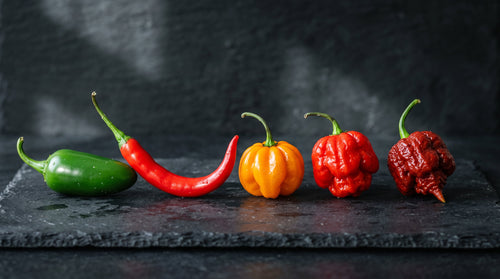
Between 100,000 and 350,000 Scoville Heat Units. For a sense of scale:
| Chilli | Scoville |
|---|---|
| Jalapeño | 1,000 – 4,000 |
| Cayenne | 30,000 – 50,000 |
| Scotch bonnet | 100,000 – 350,000 |
| Habanero | 100,000 – 350,000 |
| Carolina Reaper | 1,600,000 – 2,200,000 |
So: somewhere between twenty-five and a hundred times hotter than a jalapeño, and nowhere near the record-chasers. That is exactly the point of it. It is hot enough to matter and mild enough to eat every day, which is why whole cuisines run on it and nobody's cuisine runs on a Reaper. I wrote more about that ladder in the hottest chilli in the world.
Scotch bonnet vs habanero
This is the question I am asked most, so here it is plainly. They are the same species, Capsicum chinense, and they overlap almost entirely on heat. Swap one for the other and the dish will be about as hot.
The difference is flavour and shape. A scotch bonnet is squatter and rounder, and it is noticeably fruitier and sweeter. A habanero is more elongated and leans smokier and more floral. Neither is better. But the fruit in a scotch bonnet is why Caribbean cooking chose it and kept it: it tastes of something, not only of heat.
If you can only find habanero in Britain, use it. It is the closest thing there is.
Where the heat actually is
Not mainly in the seeds, whatever you have been told. It is in the pale membrane the seeds sit on, the placenta. Cut that out and you keep most of the flavour and lose most of the burn. Leave it in and you get everything.
That gives you a dial, and Caribbean cooks use every setting on it:
- Whole and unbroken — dropped into a pot of rice, a stew, a soup, and lifted out before serving. You get the perfume and a gentle warmth, and nobody is ambushed. This is how my mother used it most of the time.
- Halved, membrane out — fruit and colour, medium heat.
- Chopped fine, everything in — for pepper sauce, for marinades, for people who mean it.
Buying and keeping them
In Britain, most Caribbean and African grocers sell them loose, and the bigger supermarkets now stock them in small packs, usually orange or red. Choose firm, glossy ones with no soft patches. They keep a week or two in the fridge, and they freeze whole with no fuss at all, which is what I do with a glut: straight into a bag, and chop from frozen.
Wear gloves, or wash your hands with soap straight after, and keep your fingers away from your eyes for a good while. Capsaicin does not rinse off with water.
What to cook with them
Almost anything savoury from the islands. On this site, start with jerk chicken with rice and peas, where the scotch bonnet is the backbone of the marinade, or accras de morue, where a little goes into the batter. The spicy mayo is the gentlest way in.
And if you would rather not handle them at all, that is what our Caribbean Hot Sauce is: 40% scotch bonnet, with the onion, garlic and lime already balanced around it, the way it is used at home rather than the way it is used in a dare.