My Mother’s Sunday Braise From Guadeloupe
It is Sunday morning in Pointe-à-Pitre. I am maybe eight years old. My mother is at the stove before the rest of us are properly awake, and the first thing I smell is not the chicken. It is the sugar.
She has a spoon of brown sugar going dark in the hot oil, and she is watching it like it might run away. When it turns the colour of an old penny she lowers the chicken in, and the whole pan roars. That sound, and that smell of caramel catching the meat, is the smell of Sunday for me. My six brothers and sisters knew it too. When you heard that roar from the kitchen, you knew the fricassée was on the way, and you knew you had about an hour to get out of your mother’s way.
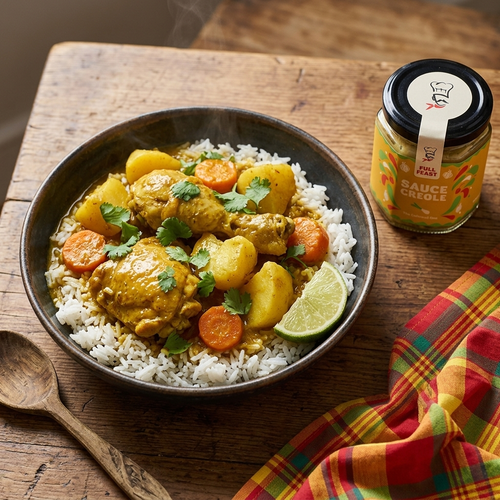
Fricassée de poulet is the everyday feast of the French Caribbean. Not a fancy dish, not a restaurant dish, a home dish. Chicken browned dark, then left to sit low and slow in a pot of tomato, thyme, garlic and Creole seasoning until it falls off the bone and the sauce turns thick and glossy. Every family in Guadeloupe makes it, and every family swears their way is the right way.
Let me show you my mother’s way. The proper way. The way I still make it now, in my kitchen, all these years and one ocean later.
Recipe at a glance
- Cuisine: French Caribbean (Guadeloupe)
- Prep: 20 minutes (plus marinating) • Cook: 45 minutes • Total: 65 minutes
- Serves: 4
- Featured sauce: Caribbean Sauce Creole
- Heat level: 5/10 (warming, not fierce)
- Diet: Gluten free, dairy free
What you’ll need
The secret of this dish is not a long list of spices. It is time, and it is the browning. Get those two things right and the rest looks after itself. I use bone-in, skin-on thighs because the bone gives the sauce its body and the skin gives it its shine. Boneless works if that is what you have, but you lose a little of the soul.
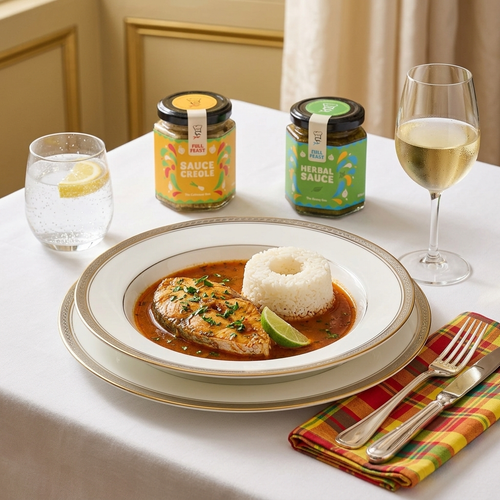
For the Creole base I lean on my Caribbean Sauce Creole. It is the rich, warming Guadeloupe Creole I grew up on, already carrying the garlic, the peppers and the slow-cooked depth that a proper fricassée wants. One jar does the work of a whole afternoon of seasoning.
For the chicken and its marinade:
- 8 bone-in, skin-on chicken thighs (about 1.2 kg), or a mix of thighs and drumsticks
- 2 limes, juiced, plus a little zest
- 4 garlic cloves, crushed
- 4 sprigs fresh thyme, leaves stripped
- 3 spring onions, finely sliced (cive, back home)
- a small handful of flat-leaf parsley, chopped
- 1 tsp fine sea salt
- 1/2 tsp freshly ground black pepper
For the braise:
- 3 tbsp vegetable or rapeseed oil
- 1 tsp soft brown sugar (this makes the roussi, the caramel)
- 2 onions, sliced
- 4 garlic cloves, sliced
- 2 ripe tomatoes, chopped (or 1 tbsp tomato purée)
- 3 tbsp Caribbean Sauce Creole
- 4 sprigs thyme
- 2 bay leaves
- 1 whole scotch bonnet, left unpierced (optional, for perfume not fire)
- 400 ml chicken stock (check it is gluten free), or water
- 1 lime, to finish
How I make it
-
Wash and season the chicken. Back home we always give the chicken a rub with lime first. Squeeze the lime over the pieces, rub it in, then rinse and pat them dry. This is how my mother did it and I have never stopped.
-
Marinate. Put the chicken in a bowl with the crushed garlic, thyme leaves, spring onions, parsley, salt and pepper. Get your hands in and work it into every piece. Cover it and leave it in the fridge. Thirty minutes will do on a busy day. A few hours is better. Overnight is best of all. You don’t rush this part.
-
Make the roussi. Heat the oil in a heavy pot over a medium heat. Scatter in the brown sugar and leave it alone. It will melt, bubble, and start to darken. When it turns a deep amber, the colour of caramel just before it burns, you are ready. Watch it closely. This is the step that gives fricassée its dark, glossy colour, and it takes maybe two minutes.
-
Brown the chicken. Lay the pieces into the caramel, skin-side down, and let them sizzle. Don’t move them around. Let them take a proper deep colour on each side, three or four minutes a side. Do this in two batches if your pot is crowded. Browned chicken is flavour; pale chicken is a missed chance. Lift the pieces out and set them aside.
-
Soften the aromatics. Into the same pot, still full of all that colour, add the sliced onions and garlic. Cook them gently until soft and sweet, about five minutes, scraping up the sticky bits from the bottom as you go. That is where the taste lives.
-
Build the sauce. Add the chopped tomatoes and let them break down for a couple of minutes. Now stir in the Caribbean Sauce Creole, the thyme and the bay leaves. Let it all cook together for a minute so the kitchen fills with that Sunday smell.
-
Braise low and slow. Return the chicken and any resting juices to the pot. Pour in the stock so the pieces are about two-thirds covered. If you like the perfume of the scotch bonnet, tuck it in whole now, but do not pierce it, or you will have a very different dinner. Bring it up to a gentle simmer.
-
Let it be. Put the lid on, leave it slightly ajar, and turn the heat right down. Now you leave it for 35 to 40 minutes. Give it a stir now and then. The chicken will grow tender, the sauce will thicken and darken, and the oil will rise up glossy on top. That glossy top is how my mother knew it was done.
-
Finish. Fish out the scotch bonnet and the bay leaves. Squeeze over the lime, taste for salt, and take it off the heat. Let it rest for five minutes before you serve. It is always better after a short rest, and better again the next day.
The role of Caribbean Sauce Creole in this dish
A fricassée lives or dies on its base. In Guadeloupe we call it the assaisonnement, the seasoning, and building it from scratch takes garlic, peppers, herbs and patience. My Caribbean Sauce Creole is that base in a jar. It is the sauce I made to taste of home: rich, warming, savoury, with a gentle heat that builds rather than bites.
When it goes into the pot after the browning, it does not sit on top of the dish. It melts into the tomato and the caramel and becomes the body of the sauce. It carries the fricassée through its slow simmer, deepening as it cooks, so that at the end you have a sauce with the depth of a dish that took all day, from a pot that took under an hour. That is the whole point of it. It gives you my mother’s Sunday without my mother’s Sunday timetable.
Tips from my kitchen
- The caramel is the soul. If you take one thing from me, take the roussi. That dark sugar is where the colour and half the flavour come from. Let it go further than feels safe, just short of burning, and the whole dish changes.
- Do not crowd the pot when you brown. Chicken packed tight will steam instead of colour. Two calm batches beat one crowded one every time.
- Leave the scotch bonnet whole. Tucked in and unpierced, it gives you its fruity perfume and almost none of its fire. Pierce it and you have made a much braver dinner than you planned.
- Make it the day before. Fricassée is one of those dishes that thinks overnight in the fridge and wakes up better. The sauce sets, the flavours settle, and Sunday’s pot becomes Monday’s treasure.
- Skim if you like. A little oil rising to the top is traditional and good, that shine is a sign of a proper fricassée. If it is too much for you, tilt the pot and spoon a little off.
What to serve it with
Back home this only ever came one way: with Creole rice and a pot of red beans, and maybe some fried plantain if it was a real celebration. The rice is not a side here, it is the reason. You want plenty of it to soak up that dark sauce.
If you want a little more green on the plate, a simple salad dressed with lime works beautifully against the richness. And if you like a fresh, herb-forward lift alongside the braise, a spoon of Fresh Herbal Sauce stirred through the rice at the end is lovely, though the fricassée stands proud on its own. For the full spread, take a look at our bundles.
FAQ
What is chicken fricassée?
Fricassée is a way of cooking where you brown the meat first and then braise it slowly in its own sauce. The Caribbean version, the one I grew up on in Guadeloupe, browns the chicken in caramelised sugar for colour, then simmers it low and slow in a Creole base of tomato, garlic, thyme and peppers until the meat is falling off the bone.
What cut of chicken is best for fricassée?
Bone-in, skin-on thighs, every time. The bone gives the sauce its body and the skin gives it shine and flavour. A mix of thighs and drumsticks is lovely too. You can use breast if you must, but it dries faster, so add it later and keep the simmer gentle.
How spicy is this fricassée?
Gentle. The Caribbean Sauce Creole brings a warming heat that builds rather than burns, around a 5 out of 10. The whole scotch bonnet, tucked in and unpierced, adds perfume, not fire. If you want more heat, pierce the bonnet or add a splash of my Caribbean Hot Sauce at the table.
Can I make chicken fricassée in advance?
You should. Like most braises, fricassée is better the next day. Cook it, cool it, and keep it covered in the fridge for up to three days. Reheat it gently on the hob with a splash of water or stock to loosen the sauce. It also freezes well for up to three months.
Is this recipe gluten free?
Yes, as long as your chicken stock is gluten free. All my Full Feast sauces are gluten free and vegan, so the Caribbean Sauce Creole adds no gluten and no dairy. Check the label on your stock, or use water, and the dish is naturally gluten free and dairy free.
Final word from me
This is the dish I would cook for you if you came to my house on a Sunday. Not because it is clever, but because it is honest, and because it tastes of the kitchen I grew up in. Put the pot on, let the sugar go dark, and give it the hour it asks for. Then sit down with people you love and a lot of rice. That is the whole recipe, really. The rest is just chicken.
JP