Bananes Pesées, The Way My Mother Made Them In Guadeloupe
When I was a boy, my mother used to send me to the market for green plantain. Never yellow. She was very clear about that. Green, hard, the skin thick like bark, and heavy, so heavy that the bag handles cut lines into my fingers on the walk back up the road.
I did not understand it then. To me a plantain looked like a banana that had gone wrong. But my mother knew. There were seven of us children, and green plantain is what you cook when the money is thin and the mouths are many. It fills a plate. It costs almost nothing. And treated properly, it tastes better than half the things people pay good money for.
She would peel them at the table with a small knife, fry the pieces once until they were soft and pale, then take a saucer or the flat bottom of a glass and press each one down flat and wide. Then back into the oil.
That is where the name comes from. Bananes pesées. Weighed bananas. Pressed bananas. You will hear the same dish called banann peze in Haiti, tostones in Puerto Rico, patacones in Colombia, and every island will tell you theirs is the correct one. I am not going to argue. I will show you how it was done in my mother’s kitchen.
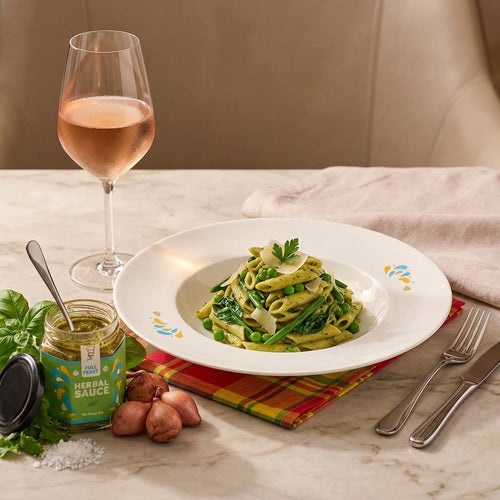
The second fry is the whole secret. The first one cooks the plantain through. The second one shatters the outside. You get a piece that is crisp at the edge and still soft in the middle, salty, hot, and impossible to stop eating. And you never eat them dry. You always have something green and garlicky to dip them in, and that is where my Fresh Herbal Sauce comes in.
Recipe at a glance
- Cuisine: French Caribbean (Guadeloupe)
- Prep: 10 minutes • Cook: 20 minutes • Total: 30 minutes
- Serves: 4 as a side or a sharing plate
- Featured sauce: Fresh Herbal Sauce
- Heat level: 0/10, no chilli at all, just herbs and garlic
- Diet: Vegan, vegetarian, gluten free, dairy free
What you’ll need
Very little, and none of it expensive. This is a poor man’s dish that eats like a rich one.
The plantain matters more than anything else on this list. You want them properly green, firm, hard skinned, no yellow creeping in at the tips. A green plantain is starchy, almost like a potato, and that is exactly what you need for frying twice. Once it turns yellow it has turned sweet, and sweet plantain goes soft and sulky in the pan instead of crisping.
You will find green plantain in Caribbean and African food shops, in Asian supermarkets, and now in the world food aisle of most big UK supermarkets. Buy one more than you think you need. Somebody always eats one straight out of the pan, standing up, burning their fingers. Usually me.
For the plantain
- 4 large green plantains, roughly 1kg
- 1 litre sunflower or groundnut oil, for frying
- 750ml cold water
- 1 tbsp fine salt
- 3 garlic cloves, crushed flat with the side of a knife
- Juice of 1 lime
- Sea salt flakes, to finish
For the herb dip
- 4 tbsp Fresh Herbal Sauce
- 2 tbsp olive oil
- 1 garlic clove, finely grated
- 2 spring onions, finely sliced
- Small handful of flat-leaf parsley, chopped
- Juice of half a lime
- Pinch of salt
You also want a heavy pan, a slotted spoon, plenty of kitchen paper, and something flat to press with. A small plate, the bottom of a glass, a chopping board, any of them will do. Back home there is a proper wooden press called a pèz banann, two pieces of wood on a hinge, and my mother had one older than she was. You do not need it.
How I make it
-
Peel the plantains. This is the part people get wrong and then decide plantain is difficult. Do not peel it like a banana, it will not have it. Cut both ends off. Run a knife down the length of the skin two or three times around, just deep enough to cut through the skin and no further. Then push your thumb under the edge and lever it off in strips. Seconds, once you know.
-
Cut them. Slice each plantain into chunks about 3cm thick, on a slight angle. Angled pieces give you more surface, and more surface means more crisp edges later.
-
Make the soaking water. In a wide bowl, stir the fine salt into the cold water until it dissolves, then add the crushed garlic and the lime juice. Set it beside the hob. You are not soaking the plantain yet. This water is for the middle of the cooking, and it is the step most recipes skip.
-
Heat the oil. Pour the oil into a deep, heavy pan so it comes no more than a third of the way up, and bring it to 160°C. Too hot at this stage and the outside colours before the inside softens.
-
The first fry. Lower in half the pieces, not all of them, or the oil temperature drops through the floor. Fry for four to five minutes, turning once, until pale gold and soft enough to give when you press one with the back of a spoon. Soft, not brown. Lift onto kitchen paper and do the second batch.
-
Press them. Now the good part. Stand a hot piece on the board, put your plate or glass on top, and press down firmly until it is about 1cm thick and roughly twice as wide. Firm, but not so hard that it splits apart. If it cracks at the edges, leave it. Those cracks turn into the crispiest bits.
-
Dip in the garlic water. Dip each pressed piece for two or three seconds, no longer. Lift it out, shake it well, and press it between kitchen paper until the surface is properly dry. This is what seasons the plantain right through instead of just on top. It is also why you dry them so carefully: water and hot oil do not forgive each other.
-
Turn the heat up. Bring the oil to 190°C. It should be visibly livelier now.
-
The second fry. Back in they go, in batches again, for two to three minutes until deep golden with crisp ragged edges. Listen to the pan. When the loud fizzing calms down, they are close.
-
Salt them straight away. Lift onto fresh kitchen paper and scatter over sea salt flakes while they are still shining with oil. Salt only sticks in that first moment. Do it late and it falls off onto the plate.
-
Make the dip. While the last batch is frying, stir the Fresh Herbal Sauce together with the olive oil, grated garlic, spring onions, parsley, lime juice and a pinch of salt. Taste it. It should be sharp, green and loud.
-
Serve immediately. Pile them into a bowl, put the dip in the middle, and put it on the table where everybody can reach. These do not wait for anybody.
The role of Fresh Herbal Sauce in this dish
Back home, fried plantain is almost never served on its own. There is always a green sauce next to it, garlic and herbs and onion and lime, sharp enough to cut through the oil. Every family makes their own and every family thinks theirs is best.
That is exactly the job my Fresh Herbal Sauce is doing here. It is packed with herbs and carries no chilli heat at all, which surprises people who only know us for the hot ones. No burn. What there is instead is greenness, a real garden freshness, and enough acidity to make a fried thing taste light.
Put a hot, salty, crisp piece of plantain into that sauce and you understand it immediately. The starch is soft and mild. The sauce is bright and sharp. One lifts the other. Loosen it with a little olive oil, wake it up with lime and fresh spring onion, and you have the sauce from my mother’s table in about ninety seconds.
It also means the children can eat this, and that matters. In Guadeloupe the plantain goes on the table for everybody.
Tips from my kitchen
- Buy them green and cook them green. If your plantains have gone yellow while sitting in your kitchen, keep them for a different dish. They will not press and they will not crisp.
- Do not crowd the pan. Two batches, always. A crowded pan drops the oil temperature and you end up with plantain that has absorbed oil instead of being sealed by it.
- Dry them before the second fry. I say it twice because it matters twice. Shake, pat, then fry.
- Press while they are hot. Once a piece has cooled it goes stubborn and splits instead of flattening. Work quickly, straight out of the pan.
- Rub a little oil on your hands before peeling. The sap in a green plantain skin is sticky and it stains. A film of oil on your fingers and it wipes straight off.
What to serve it with
At home these come out as a side, not a starter. They go beside grilled fish, beside a stew, beside rice, beside anything with sauce that needs mopping up. Put them next to my court bouillon and you have a proper Guadeloupe plate.
They are also very good as a sharing plate with drinks, which is how most of my UK friends end up eating them. In that case put out two dips. The green herb one stays, and next to it something with heat: a small bowl of Caribbean Hot Sauce, or the fruitier Exotic Caribbean Sauce if you would rather go sweet and gentle against the salt. If you cannot decide, the Spicy Discovery Trio puts three small jars on the table and lets everybody argue it out.
A cold beer. A wedge of lime. That is all it needs.
FAQ
What is the difference between a plantain and a banana?
They are cousins, not twins. A plantain is bigger, firmer, thicker skinned and much starchier, with far less sugar when it is green. You cannot eat one raw the way you would eat a banana. It is a cooking fruit, and in my part of the world it is treated the way you treat a potato here: fried, boiled, mashed, put next to everything.
Can I use ripe yellow plantain instead?
Not for this one. Ripe plantain has turned its starch into sugar, so it goes soft and sweet rather than crisp, and it falls apart when you press it. It is delicious, but it wants a single gentle fry until the sugars caramelise at the edges. Buy green, cook green.
Can I make these in an air fryer or the oven?
You can, and they will be good, though not quite the same. For an air fryer, brush the pieces with oil, cook at 180°C for about eight minutes, press them, dip them in the garlic water, dry them, brush again and give them another six to eight minutes at 200°C. In the oven, use a hot tray at 200°C fan and expect a drier, chewier result. What you lose is the shattering edge that only proper hot oil gives you. What you gain is less washing up, and I will not pretend that is nothing.
Can I make them ahead of time?
Half of them, yes. Do the first fry and the pressing up to a few hours before and leave the flattened pieces on a tray. Then do the garlic water dip and the second fry just before you eat. That is what I do when people are coming over, because standing at a pan while everybody talks in the other room is nobody’s idea of a good evening. What you cannot do is fry them fully in advance. A twice-fried plantain that has sat around goes soft and sad, and reheating never brings it back.
Do I have to use a thermometer?
No. My mother never owned one. She judged it by sound and by the way the oil moved. Drop in a small piece of plantain: a slow steady sizzle is about right for the first fry, a quick busy one for the second. But if you have a thermometer in a drawer somewhere, 160°C and 190°C will get you there first time.
Final word from me
This is not a fancy recipe and I would not want you to treat it like one. It is four plantains, some oil, some salt and a good green sauce. But it is the taste of my mother’s kitchen, and of a boy walking home with a bag too heavy for him, not yet knowing the cheapest thing in it would be the thing he missed most.
Make them once and you will make them again. Put the bowl in the middle of the table where everybody can reach, and do not bother with plates.
JP