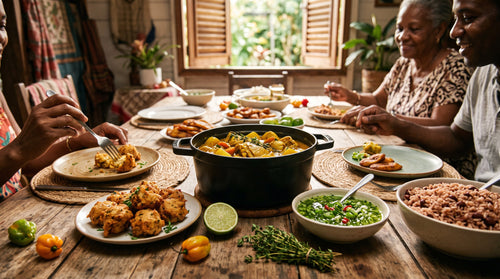
Colombo is the curry of the French Caribbean. Chicken, goat or pork, cooked down with a spice blend of the same name, until the sauce is thick and golden and the meat gives up. In Guadeloupe and Martinique it is what you cook on a Sunday, what you serve at a christening, what a roadside kitchen sells by the plate. It is as close to a national dish as we have.
And it is not from the Caribbean at all. It came from southern India, on a ship, in the 1850s, and the story of how is one of the stories of my island.
1848, and the problem it created
France abolished slavery in its colonies in 1848. In Guadeloupe and Martinique, tens of thousands of formerly enslaved people walked off the sugar plantations, which was the right and obvious thing to do, and left the planters with fields and no one to work them.
The planters' solution was the same one the British had reached a decade earlier in Trinidad and Guyana: import labour under contract from India. Between 1854 and 1889, more than 40,000 indentured workers arrived in Guadeloupe from the south of India, mostly Tamil-speaking, mostly from the area around what was then called Madras and the French trading post of Pondichéry. Martinique took around 25,000 more.
Indenture was not slavery. It was also not freedom. The contracts were five years, the conditions were hard, and many did not survive them. Those who did mostly stayed. Their descendants are Guadeloupean, full stop, and they are around a tenth of the island today.
They brought their food with them.
What arrived
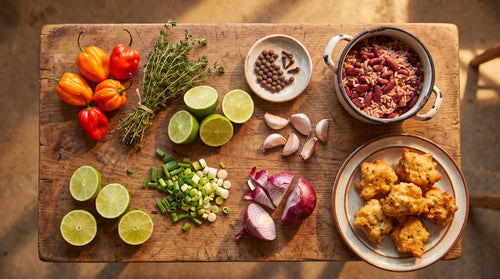
Specifically, they brought the habit of a ground spice blend built on turmeric, coriander seed, cumin, fenugreek, mustard seed and chilli, which in Tamil kitchens is the base of a great many dishes. On the islands it met what was already there: allspice, thyme, garlic, lime, scotch bonnet, and the French habit of browning meat first and building a sauce in the pan.
Over two or three generations those two things became one thing, and it got a name. Nobody is certain where "colombo" came from. The likeliest answer is the city of Colombo in Ceylon, present-day Sri Lanka, which was the port a lot of the spice trade moved through and a name French sailors would have known. It is a good enough answer. The dish does not need a better one.
Colombo powder
The blend itself is what makes it ours rather than simply an Indian curry cooked abroad. A typical Guadeloupean poudre à colombo is:
- Turmeric, which gives it the colour
- Coriander seed
- Cumin
- Fenugreek
- Black mustard seed
- Black pepper and dried chilli
- Cloves, sometimes
- And the one that gives it away: toasted rice, ground in with everything else
The rice is the Caribbean fingerprint. It thickens the sauce slightly and gives the blend a nutty, rounded base that an Indian curry powder does not have. Families buy it ready-ground from the market or make their own, and every family's is correct.
How the dish is built
Brown the meat. Soften onion and garlic. Add the colombo powder and let it toast in the fat for a minute so it stops tasting raw. Then water or stock, thyme, a whole scotch bonnet dropped in unbroken, and time. Towards the end, the vegetables that make it a meal: aubergine, chayote (we call it christophine), potato, sometimes green mango for sharpness. A squeeze of lime at the end. Rice on the side, always.
It is warmer and rounder than a Jamaican curry, which leans on allspice and Jamaican curry powder. It is less sweet than a Thai one. It is not hot unless you want it to be, because the scotch bonnet goes in whole and comes out whole.
Why you have never seen it in Britain
Because Britain's Caribbean food came from Jamaica, Trinidad and Guyana, and those islands' Indian-descended cooking took a different path: roti, doubles, curry goat with a Trinidadian curry powder. All wonderful. None of it is colombo. The French islands sent their emigrants to Paris, not London, so the dish never had a community here to carry it.
Which is a long way of saying that if you make one this Sunday, you will almost certainly be the first person on your street to do so.
Where to start
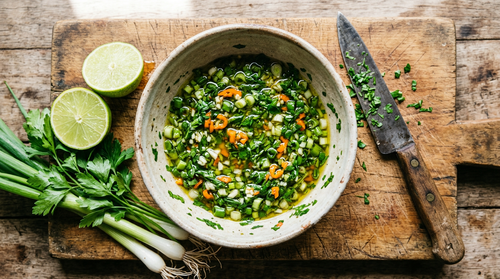
The curry goat on this site is cooked the colombo way, and it is the one I would start with. Poulet colombo is the chicken version and quicker. Both use our Sauce Creole as the base, which is the onion, chilli and vinegar layer that a Guadeloupean cook would build from scratch.
For the wider picture of what we eat and why, the guide to Guadeloupean food is the place, and what Creole food actually is explains where colombo sits in the family.